


Webflow & Shopify, working as one
When a brand needs to sell, we reach for Shopify. When it needs to tell a story, build authority and stay findable, we reach for Webflow. The skill is making the two feel like one site, not two systems bolted together.
Why we use Shopify
We use Shopify because it's the most reliable, scalable commerce platform available, and it lets us focus our energy on the experience rather than the plumbing. Payments, tax, shipping, inventory and checkout are solved problems on Shopify. That frees us to build the parts that actually shift the numbers: merchandising, product storytelling and a buying experience that feels considered.
In practice, Shopify earns its place for four reasons:
- Checkout you don't have to worry about. Shopify's checkout is secure, fast, and handles the edge cases (tax, currency, fraud, abandoned carts) that quietly cost smaller platforms sales.
- It scales with the brand. From a pre-launch store taking first orders to a catalogue spanning hundreds of SKUs and multiple markets, the platform grows without a rebuild.
- A real ecosystem. Apps and integrations for subscriptions, reviews, loyalty, logistics and marketing exist and are maintained. We choose carefully rather than installing everything, but the options are there when a brand needs them.
- Owners can run it. Once it's built well, a non-technical team can add products, run a sale and manage stock without calling a developer.
The honest answer is that Shopify isn't right for every project. Plenty of the sites we build don't sell anything, and those are better served by Webflow alone. Shopify is the tool we reach for when commerce is genuinely part of the brief.
When Shopify, when Webflow, when both
There's no single right answer, and any studio that gives you one before understanding your business is guessing. Here's how we think about it.
Webflow alone
Suits brands whose website's main job is to inform, build trust and be found: clinics, hospitality, design-led practices, B2B. The platform gives us complete design control, a flexible CMS, and the structure that modern search and AI discovery reward.
Shopify alone
Suits brands whose website's main job is to sell, where the catalogue, checkout and merchandising are the centre of gravity. A focused, well-built Shopify store often beats a Webflow site with commerce stapled on.
Webflow + Shopify
Suit brands that need both: a rich brand and content experience, plus a proper store. We build Webflow as the brand and content platform, and run Shopify as the commerce engine, designed so the transition between them feels like one site. This is the setup behind MILKLAB and The Surgery Dunedin.
How we build on Shopify
We build Shopify to fit the brief, not to prove a point. Sometimes the smartest move is a quality theme, properly customised. Sometimes it's a fully custom storefront. Knowing which is right for your situation is part of what you're paying for.
In practice, we work across a spectrum:
A premium theme, customised properly
For a lot of stores, starting from a strong, flexible theme is the better spend. It brings down time and cost while leaving plenty of room to shape the store around the brand. Done well, the result feels like the business, not the theme. This is how we approached Moi on George and Little Graham.
A fully custom storefront
When a brand needs complete design control, we build the store in Webflow and let Shopify power the cart and checkout behind it. You get Webflow's design freedom with Shopify's commerce engine, working as one. (We use integration tools like Smootify and Shopyflow for this.)
Merchandising that does work
Collection structure, navigation, search and filtering, featured products and designers. The store should guide a customer, not just list stock.
The integrations that matter, and none of the ones that don't
Pre-sale ordering, trade pricing, gated or approval-based purchasing, subscriptions, custom product fields. We scope these to the brief rather than bolting on apps for the sake of it.
Built-in SEO and AEO foundations
Clean structure, schema, answer-first content and AI search readiness are part of how we build, not an add-on.
Evolution after launch
A store is never finished. We stay involved to refine merchandising, improve conversion and adapt as the range grows. More on how we work.
Selected Shopify work

MILKLAB
A global plant-based beverage brand we've partnered with since 2022. Webflow runs the brand, content and campaign infrastructure; Shopify runs a contained merchandise store designed to feel native to the wider site. A good example of commerce sandboxed deliberately, so it supports the brand without compromising it.

The Surgery Dunedin
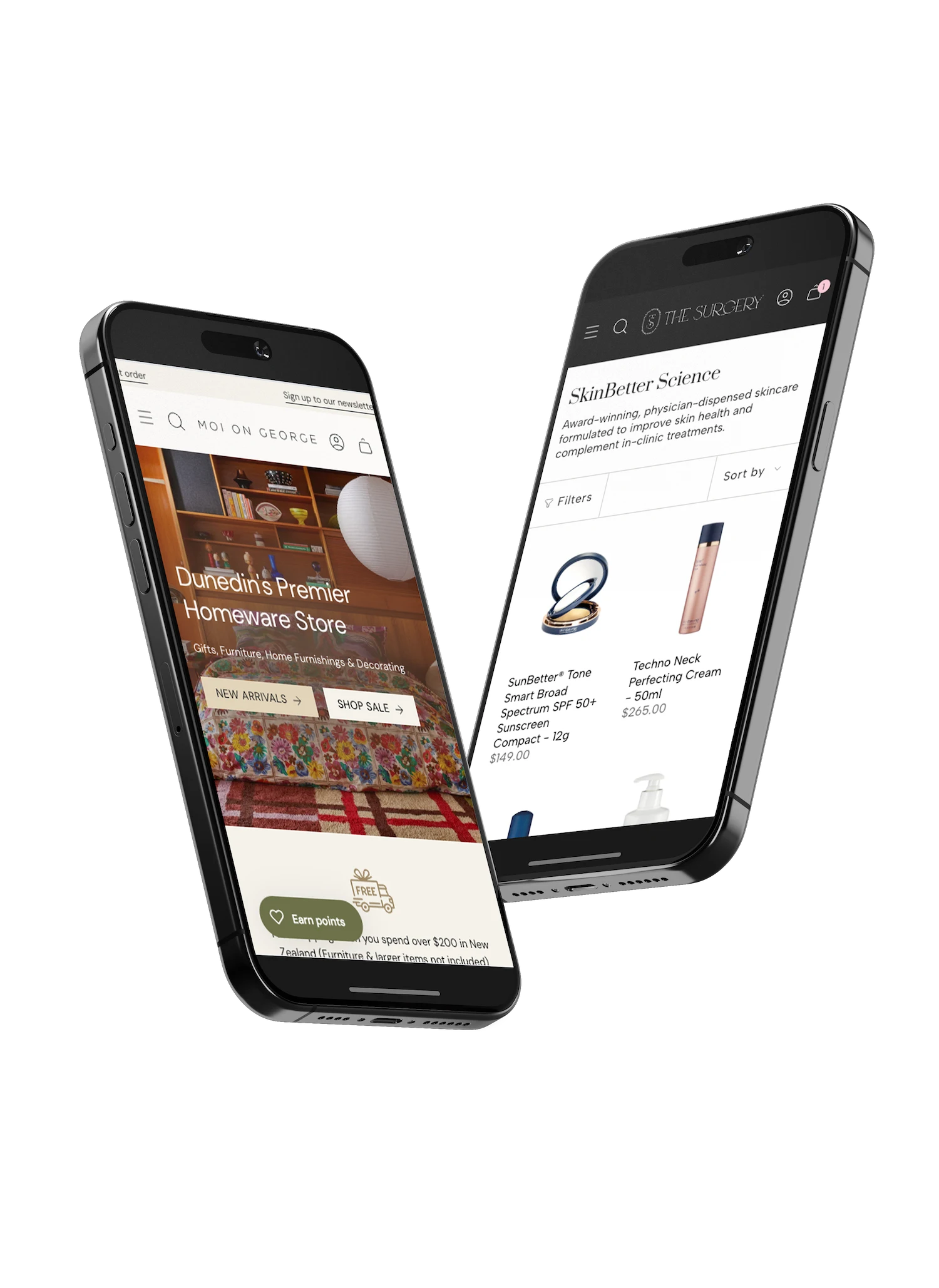
A connected Webflow and Shopify ecosystem for a plastic surgery clinic. Webflow handles patient education and authority; Shopify handles professional skincare ecommerce, including approval workflows and gated purchasing for restricted brands. Proof that Shopify can handle genuinely complex, rules-based buying.

Moi on George
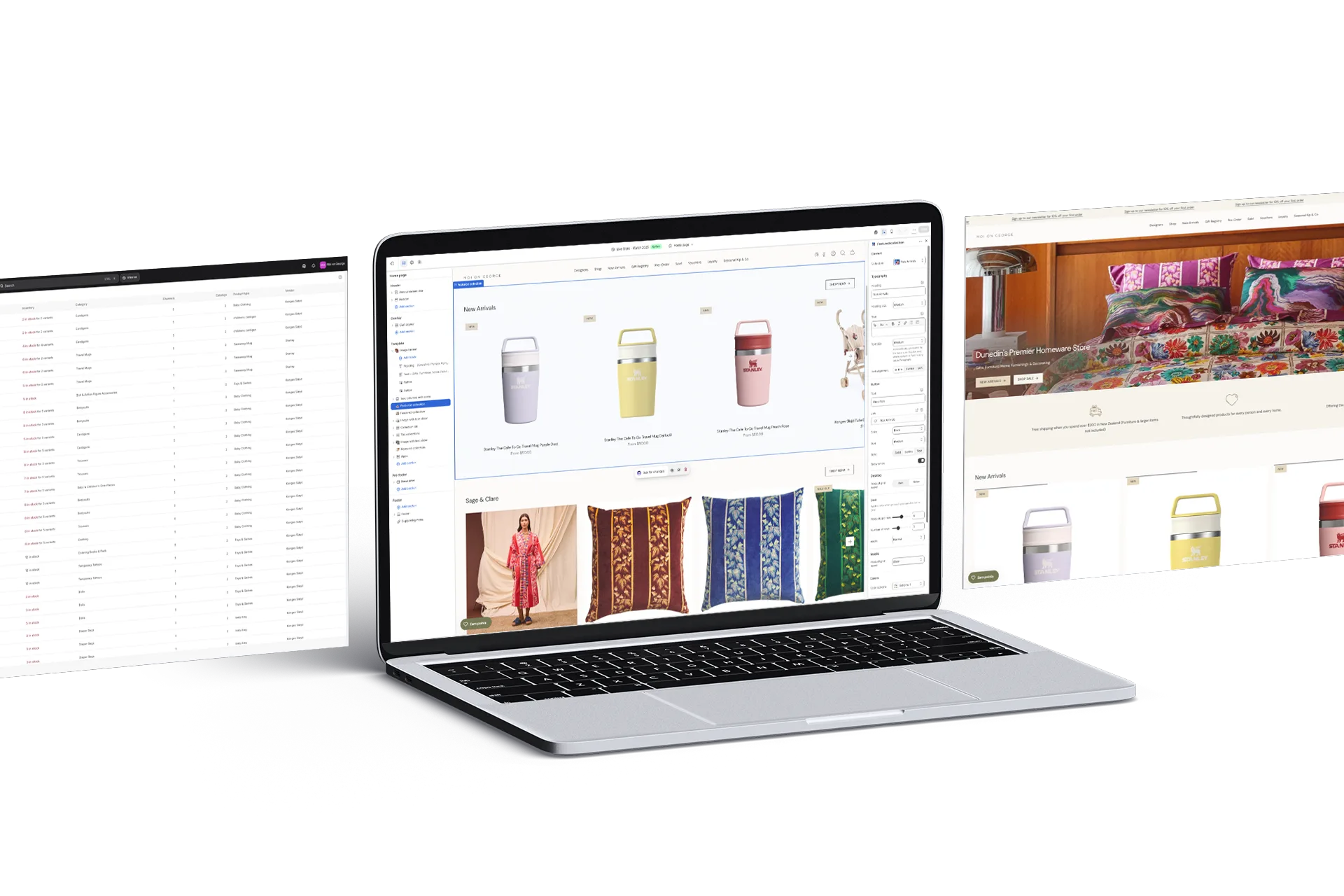
A full Shopify overhaul for a design-led homewares store. We replaced a slow, page-builder-heavy setup with a clean, modern store built around bold collection highlights, a clearer mega menu and better search and filtering, letting featured designers shine and making the store far easier to manage.

Little Graham
A bespoke Shopify store built from pre-launch through to market for a curated furniture brand. Image-led throughout, with custom integrations for pre-sale ordering ahead of manufacture, trade discounts for industry partners, and custom fields for dimensions and materials.

Frequently Asked Questions
Do you build on Shopify or Webflow?
Both. We're a Webflow-first studio, and we use Shopify when a project needs proper ecommerce. For many brands the best answer is the two working together: Webflow for brand and content, Shopify for the store.
Can you integrate a Shopify store with a Webflow website?
Yes. Connecting a Webflow brand site with a Shopify store is one of our core specialities. We design the two so the move between them feels like one site rather than two separate systems.
Do you use Shopify themes or build custom?
Both, depending on what gets you the best result. For many stores, a quality theme customised properly is the smarter spend: faster and more cost-effective, with plenty of room to shape it around the brand. When a brand needs full design control, we build a fully custom storefront in Webflow with Shopify powering the checkout. What we won't do is drop a business onto a generic theme with no thought.
Will my team be able to manage the store ourselves?
Yes. We build Shopify so a non-technical team can add products, run sales and manage inventory without a developer. We also include a handover so you're confident using it.
What size of ecommerce project do you take on?
We work with brands that treat their store as a long-term asset, typically as a full build rather than small one-off changes. If you're not sure whether your project's a fit, a short call will tell us both quickly.
Do you keep working on the store after launch?
Yes, and we'd encourage it. A store performs best when it's refined over time, so we offer ongoing evolution to improve merchandising, conversion and content as the range and the business grow.
Planning a store, or a site that needs one?
Whether you need a bespoke Shopify store, a Webflow-Shopify integration, or you're still working out which way to go, we'd like to hear what you're building towards.