

Frequently asked questions
A short set of answers to the questions we hear most when people are considering a Webflow build, a Webflow-Shopify integration, or ongoing improvement post-launch. If you're weighing options or trying to understand how we work, start here.
Working With Us
These questions cover who we are, how we work, and what it's like partnering with a small, senior studio. If you're weighing up fit, wanting to understand our approach, or curious about what makes us different from a larger agency, start here.
Who are Dot The i Studio?
We're a two-person senior studio that designs, builds, and orchestrates bespoke websites on Webflow. Founded by Alec (strategy and development) and Jamie (design and direction), we're based in Melbourne and Dunedin, and work with clients across Australia, New Zealand, and selectively around the world.
Our focus is custom Webflow websites and Webflow-Shopify integrations for businesses that treat their website as core infrastructure, not just a marketing asset. We stay involved after launch through Website Evolution, so the site keeps doing real work for the business long after it goes live.
We're a Webflow Certified Partner, independently vetted by Webflow for technical and design quality.
Who will I actually be working with?
You'll work directly with Alec and Jamie, the same two people who founded the studio. There are no account managers, no junior handoffs, and no layers between you and the people doing the work.
Both of us are involved in every project, from strategy through to launch and beyond. Where specialist expertise is needed, branding, SEO, or content strategy, we bring in trusted partners we've worked with before. But we remain accountable for how everything fits together.
Where are you based?
Melbourne, Australia and Dunedin, New Zealand. Most of our clients are in Australia or New Zealand, though we regularly work with international clients too, particularly on Webflow-Shopify integrations.
Remote collaboration is built into how we work. We use Slack, Loom walkthroughs, and regular video calls to keep things smooth regardless of where you are.
What types of businesses do you work with?
We work best with businesses that treat their website as strategic infrastructure, not an online brochure. In practice, that's typically wellness and health clinics, food and beverage brands, and design-led businesses that care about how they show up online.
The common thread is a preference for quality and clarity over speed and volume. Our clients value long-term thinking, are happy to be guided through the right decisions, and want a website that genuinely supports the business as it grows.
If you're looking for a quick, cheap build, we're not the right fit, and we'd rather say that upfront than waste your time.
How is working with a small studio different from a larger agency?
The biggest difference is who does the work. At a larger agency, senior people often pitch the project, then hand it to a junior team to deliver. With us, the people you meet at the start are the same people designing, building, and refining your site.
That means fewer misunderstandings, faster decisions, and a higher standard of craft throughout. You also get genuine continuity, we know your project inside out because we built it, and that knowledge carries through into ongoing support.
The trade-off is capacity. We only take on a handful of projects at a time, which is deliberate. It means we can give each client the attention the work deserves.
What if my project needs branding, SEO, or copywriting beyond what you do?
The honest answer is we don't try to do everything ourselves. Where specialist expertise is needed, branding, SEO, content strategy, photography, we collaborate with a small group of trusted partners we've worked with for years.
These specialists can either be scoped directly into our proposal, or run as parallel engagements that we coordinate alongside the build. Either way, we remain accountable for how the website is planned, built, and stitched together.
This approach lets us hold the line on quality without pretending to be a full-service agency. You get senior people doing the work in their actual area of strength, not generalists stretched thin.
Our Process & Timelines
A smooth project comes down to clear stages, the right inputs at the right time, and decisions that don't drift. This section outlines how we run projects from strategy through to launch, what to expect at each step, and the practical factors that influence timelines.
What does your design and development process look like?
Every project moves through three connected phases: Strategy, Build, and Evolution.
Strategy is where we define what the website needs to do before any pixels move. We work through business goals, audience, content, and priorities, so we're building with intent rather than guesswork. This phase is what stops a site becoming a collection of disconnected ideas.
Build is where design and development happen in parallel. Jamie leads design direction in Figma while Alec handles the Webflow build, with regular Loom walkthroughs and check-ins so you're never wondering where things are at. We test thoroughly before launch: responsive behaviour, performance, accessibility, and functionality.
Evolution is what happens after launch. Rather than handing over the keys and disappearing, we stay involved to refine, update, and improve the site over time. This is where most of the long-term value gets created, and it's the part of our model we care most about.
How long does a typical project take?
Most projects take between 6 and 12 weeks from kickoff to launch. The exact timeline depends on the complexity of the site, the number of pages, and how quickly content comes together on your side.
Simpler sites, say, a focused five-to-eight page site for a clinic or studio, tend to sit at the shorter end. Larger builds with e-commerce integration, multiple content types, or complex functionality take longer.
We'll give you a realistic timeline in our proposal. We'd rather be honest upfront than overpromise and create stress down the line.
What do you need from me during the project?
The most important thing is timely feedback and content. We'll guide you on what's needed and when, but the pace of a project is often set by how quickly decisions are made and content is provided on the client side.
Beyond that, we ask for your involvement at a few key moments, the kickoff, design review, and pre-launch review. These check-ins are where the important decisions happen, and they're most productive when the right people from your team are in the room.
What content do I need to provide, and when?
Content is the single biggest factor in keeping a project on track. We'll provide a clear content plan early in the process, outlining exactly what's needed, text, images, brand assets, and when each piece is due.
If you don't have content ready, that's okay. We can recommend copywriters and photographers from our trusted network, or work with what you have and refine it as part of the project. What we try to avoid is designing around placeholder content that never gets replaced, it almost always leads to a weaker outcome.
Do you have relevant experience in my industry?
Probably, and if not, we'll tell you straight. Our work clusters around three industries we know well: wellness and health (clinics, studios, practitioners), food and beverage brands (including DTC and Webflow-Shopify), and design-led businesses across professional services and lifestyle.
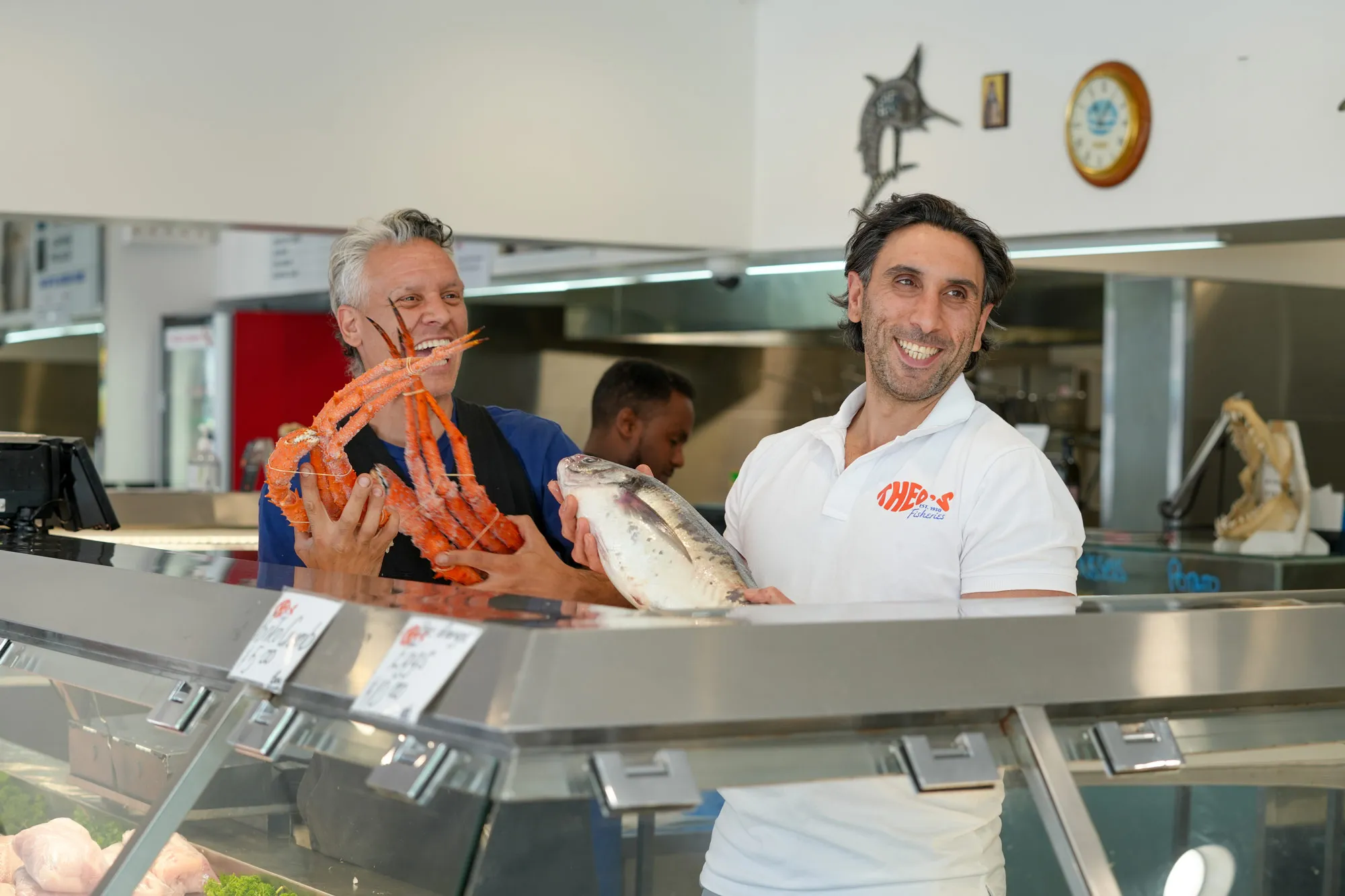
You can see current examples on our projects page, including clients like MILKLAB, Theo's Fisheries, and Active Health Riverina.
That said, industry experience matters less than people often think. What matters more is whether the underlying patterns transfer: how customers find you, what decisions they need to make on the site, and how the business actually uses the website day-to-day. If we don't have direct sector experience, we'll say so, and we'll explain why we still think we can do the work well.
Investment & Scope
Pricing questions are rarely about a number alone, they're about what's included, what drives complexity, and how scope is managed once work begins. These FAQs explain how we approach proposals, what typically affects investment, and how we keep projects structured and fair for both sides.
What affects the cost of a website project?
Several things, in this order of impact:
The strategic complexity of the project: how clear the goals are, how many decisions need to be made, and whether the underlying structure already exists or needs to be developed from scratch.
The scope and structure: number of unique page templates, CMS architecture, custom interactions, and whether e-commerce or Shopify integration is involved.
The content situation: whether copy, photography, and brand assets are ready, or whether we need to coordinate the creation of those as part of the project.
We scope each project individually and present a detailed proposal so you know exactly what's included before anything begins. We don't publish fixed pricing because a number without context isn't useful, and our work isn't priced by the hour or the page.
What we can say honestly: we don't compete on price, we don't take template work, and we don't take rushed low-budget builds. The clients who get the most from working with us are the ones who see their website as long-term infrastructure, not a one-off cost to minimise.
How do revisions and scope changes work?
Our process is built around structured feedback rounds at clear milestones, not unlimited revisions. This keeps projects focused and prevents the kind of scope creep that drags timelines and budgets out.
Each phase of the project has defined review points where you provide consolidated feedback. We find this approach leads to better outcomes than an open-ended back-and-forth, because it encourages considered, decisive feedback rather than reactive changes.
If the scope genuinely needs to change during a project, new pages, additional features, a shift in direction, we'll discuss it openly, explain the impact on timeline and budget, and agree on next steps before anything changes.
Do you offer payment plans?
Yes. We typically structure payments across milestones, a deposit to begin, progress payments aligned to key stages, and a final payment at launch. The exact structure depends on the project size and timeline, and we'll outline it clearly in our proposal.
This approach keeps things fair for both sides. You're never paying for work that hasn't been done, and we can maintain momentum without financial delays stalling progress.
Webflow & Technology
Platform decisions affect everything from performance and editing, through to scalability and long-term maintenance. This section answers the most common technical questions we hear about Webflow, migrations, and integrations, so you can understand what's possible and what's worth considering before committing.
Why do you use Webflow?
Webflow gives us the best combination of design flexibility, clean code output, and client-friendly content management. It lets us build bespoke, visually rich websites without the technical debt and maintenance overhead that comes with platforms like WordPress.
For our clients, the practical benefits are significant. Webflow sites are fast, secure, and genuinely easy to edit, you can update text, swap images, and manage blog content without needing a developer. Hosting and security are handled natively, so there are no plugins to update, no security patches to worry about, and no surprise maintenance bills.
We're a Webflow Certified Partner, which means our work has been independently reviewed and approved by Webflow. It's a quality benchmark, not just a badge.
How does Webflow compare to WordPress?
The short answer: Webflow is a more modern, lower-maintenance platform that produces cleaner, faster websites, but it's not the right choice for every project.
WordPress powers a huge portion of the web and has an enormous plugin ecosystem. But that flexibility comes with complexity, regular updates, plugin conflicts, security vulnerabilities, and a reliance on developers for most design changes. For businesses that want a clean, well-built site without ongoing technical maintenance, Webflow is a significantly better fit.
Webflow's visual builder means the design you see is the site you get, there's no gap between a Figma mockup and the finished product. It also means we can iterate faster during the build and make changes more efficiently after launch.
We've helped several clients migrate from WordPress to Webflow, and the consistent feedback is that the day-to-day experience of managing their site improved dramatically.
Can you integrate Webflow with Shopify?
Yes, Webflow-Shopify integrations are one of our core specialities. This setup gives you the best of both platforms: Webflow's design flexibility and content management for your brand and marketing pages, with Shopify's robust e-commerce engine handling products, checkout, and fulfilment.
We build these integrations cleanly, so the experience feels smooth to your customers even though two platforms are working behind the scenes. It's a setup that scales well and avoids the compromises you'd make by forcing everything into one platform.
What other integrations and tools do you work with?
Beyond Shopify, we regularly integrate Webflow with tools like Klaviyo, Mailchimp, HubSpot, Google Analytics, and various booking and scheduling platforms. We also work with Make and Zapier for automation where it makes sense.
If you have a specific tool or platform in mind, mention it when you get in touch and we'll let you know whether it's a straightforward integration or something that needs more planning.
Can you migrate my existing site to Webflow?
Yes. We've migrated sites from WordPress, Squarespace, Wix, and custom-built platforms into Webflow. The process involves auditing your current site, planning the content and structure for Webflow, handling the build, and managing the technical cutover, including redirects and SEO preservation.
A migration is often a good opportunity to rethink the site's structure and content rather than just replicating what exists. We'll help you decide what to keep, what to improve, and what to leave behind.
AEO & AI Search
Search is changing. More people now ask AI tools like ChatGPT, Perplexity, and Google's AI Overviews instead of scrolling through traditional results. The websites that show up in those answers aren't always the ones that ranked first in classic SEO. This section covers what that shift means, and how we build sites that are ready for it.
What is AEO, and why does it matter?
AEO stands for Answer Engine Optimisation. It's the practice of structuring a website so AI tools like ChatGPT, Perplexity, Claude, and Google's AI Overviews can find, understand, and quote it when people ask questions.
It matters because search behaviour is shifting fast. People increasingly ask AI tools direct questions instead of clicking through a list of blue links. If your website isn't structured for that kind of discovery, you become invisible in conversations where you'd otherwise be the obvious answer.
AEO doesn't replace traditional SEO, it builds on top of it. The fundamentals of clear content, good structure, and technical health still matter. AEO adds a layer of intent, clarity, and structured data on top, so AI tools have something useful to extract.
Do you build websites with AEO in mind?
Yes, it's part of how we build every project now. We treat AEO as part of the foundational work, not an add-on service.
In practice, that means clear page intent and heading hierarchy, answer-first content blocks that AI tools can extract, structured data (schema markup) where it's relevant, and FAQ patterns built into pages where buyers genuinely have questions. We also pay attention to internal linking, last-updated signals, and the technical fundamentals (performance, accessibility, crawlability) that AI search systems rely on.
We're not an SEO agency, and we don't pretend to be. But getting the foundations right at build time is significantly cheaper than retrofitting them later. For clients who want to go further, we collaborate with trusted SEO partners on deeper strategy.
Can you improve AEO on a website we already have?
Yes, this is one of the most common pieces of work we take on through our Website Evolution service. Most existing sites have meaningful AEO gaps, thin metadata, weak heading structure, no schema markup, or content that doesn't answer real buyer questions clearly.
We typically start with an AEO audit of the highest-priority pages, then work through the gaps systematically: rewriting page intros, restructuring headings, adding extractable FAQ blocks, implementing schema, and tightening internal links. The work compounds, and it's the kind of thing that pays off month after month rather than as a one-off win.
If you've got a Webflow site already, this is straightforward. If you're on another platform, we can still help, though some technical limitations may apply depending on the platform.
After Launch
Launch is an important milestone, but it's rarely the moment the real value creation stops. These questions explain what happens once your site goes live, how we handle handover, and what ongoing support can look like if you want your website to stay current, credible, and effective over time.
What happens after my website launches?
We don't hand over the keys and disappear. Every project includes a handover period where we walk you through the CMS, answer questions, and resolve anything that surfaces in the first few weeks.
Most of our clients then move into an ongoing relationship through Website Evolution. This is where we continue to refine, update, and improve the site so it keeps pace with the business as it grows.
The honest reality is that a website at launch is the starting point, not the finish line. The sites that perform best over time are the ones that are actively tended to, not the ones that get rebuilt every three years out of frustration.
What is Website Evolution?
Website Evolution is our retainer service for clients who want their website to keep pace with their business. Rather than letting a site gradually drift out of date and then paying for a full rebuild every few years, we make considered improvements on a regular rhythm.
That might include refining content and page layouts, adding new sections or pages, improving performance, strengthening AEO and search visibility, or adapting the site based on how visitors are actually using it. It's not a maintenance contract, and it isn't a care plan. It's a genuine partnership focused on making the site more effective over time.
We offer three tiers depending on what you need: Core Platform Care for stability and reliability, Continuous Optimisation and Growth for businesses focused on continuous improvement, and Strategic Digital Leadership for teams that want a long-term digital lead embedded with them.
Think of it as the difference between a garden that's tended regularly and one that gets redesigned from scratch every three years. The first approach is more sustainable, more cost-effective, and produces better results.
Do I need ongoing support for my website?
You don't need it, but in our experience, the businesses that invest in ongoing website improvement see significantly better results than those that launch and leave.
Webflow handles the technical side, hosting, security, and platform updates, so you won't need developer support just to keep the lights on. But content goes stale, business priorities shift, and user expectations evolve. A site that was perfect at launch can quietly become a liability within a year or two if it's not actively maintained.
Whether that ongoing support comes from us or from your own team is up to you. We'll make sure you have the knowledge and tools to manage the basics yourself.
Can I update my Webflow site myself?
Absolutely. One of the major advantages of Webflow is that it's genuinely easy for non-technical people to manage. You can update text, swap images, publish blog posts, and manage CMS content without touching code or calling a developer.
We set up every site with a clear, well-organised CMS structure and provide a walkthrough so you're confident managing the day-to-day. For more structural changes, new page layouts, added functionality, or design updates, that's where we typically step back in.
Getting Started
If you're considering working together, this section lays out the simple first steps. It covers how to reach out, what the initial conversation is like, and what (if anything) you should prepare, so you can move forward with clarity and without pressure.
How do I get started with Dot The i Studio?
Start by reaching out through our contact page with a brief overview of what you're looking for. We'll get back to you within one to two business days to set up an initial conversation.
There's no pressure and no hard sell. The first conversation is about understanding your business, your goals, and whether we're the right fit for each other.
What does the first conversation look like?
It's a relaxed, focused chat, typically 20 to 30 minutes over video call. We'll ask about your business, what you're trying to achieve with the website, and any specific requirements or constraints you already know about.
We'll also share how we work, what the process looks like, and give you an honest steer on whether what you're after aligns with what we do. If it's a good fit, we'll follow up with a detailed proposal.
What should I have ready before we talk?
Nothing formal, but it helps to have a rough idea of what you want the site to do, who it's for, and any examples of sites you like (or don't). If you have existing brand guidelines, a logo, or previous design work, having those on hand is useful but not essential.
Don't worry about having everything figured out. Helping you clarify the brief is part of what we do.
Still unsure?
If you’re weighing up options or trying to clarify scope, we’re happy to have an initial conversation to understand your goals and see whether there’s a good fit. If it is, we’ll outline a clear path forward.